
Nicolas Maduro Vs Donald Trump: Power, Crisis and Struggle for Venezuela’s Future
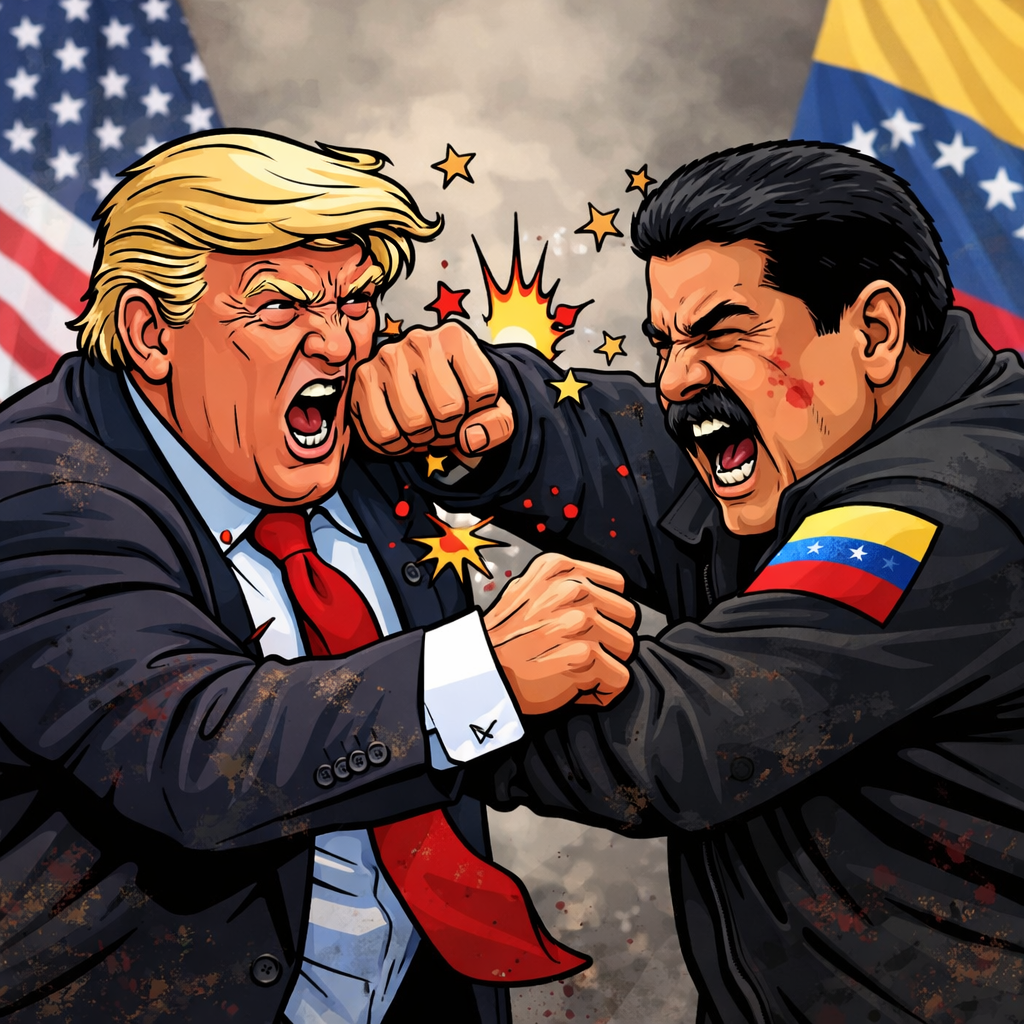
Nicolás Maduro is one of the most debated political leaders in modern Latin American history. He is admired by supporters as a defender of national sovereignty and vilified by critics as an authoritarian ruler. Maduro’s presidency has unfolded during one of the most turbulent periods Venezuela has ever experienced. His journey from a working class background to the highest office in the country mirrors the dramatic political changes Venezuela has undergone over the past several decades. There is huge fight between Donald Trump and Nicolas Maduro.
This article is about Nicolás Maduro’s life, rise to power, governing philosophy, presidency, domestic and international challenges, and the lasting impact of his leadership on Venezuela and the wider world.
Early Life and Background
Nicolás Maduro Moros was born on November 23, 1962, in Caracas, Venezuela. Unlike many political leaders who come from elite or academic backgrounds, Maduro’s early life was shaped by working-class experiences. He grew up in a modest household and entered the workforce at a young age, eventually becoming a bus driver for the Caracas Metro system.
During this period, Maduro became involved in labor activism. His participation in trade unions and worker organizations played a key role in shaping his political identity. He developed strong left-wing views, emphasizing social equality, labor rights, and resistance to economic inequality. These formative years laid the foundation for his future involvement in politics and aligned him with broader socialist movements in Venezuela.
Maduro was also influenced by revolutionary ideas from Latin America and beyond. He reportedly spent time in Cuba, where he became familiar with socialist ideology and the Cuban political system. These experiences deepened his commitment to anti-imperialism and state-led economic development.
Connection with Hugo Chávez
Maduro’s political career cannot be understood without reference to Hugo Chávez. Hugo was charismatic leader who transformed Venezuelan politics in the late 20th and early 21st centuries. Maduro became an early supporter of Chávez after Chávez’s failed coup attempt in 1992 and later during his rise as a political figure.
When Chávez won the presidency in 1998, he launched what became known as the Bolivarian Revolution, a project aimed at redistributing wealth, expanding social programs, and challenging U.S. influence in Latin America. Maduro emerged as a loyal and dependable ally within this movement.
Over the years, Maduro held several important roles under Chávez. He served as a member of the National Assembly, later becoming its president, and eventually was appointed Minister of Foreign Affairs. In this position, Maduro became one of the most visible faces of Venezuela on the international stage, promoting alliances with left-leaning governments and strengthening ties with countries such as Cuba, Russia, China, and Iran.
Chávez’s trust in Maduro culminated in 2012, when Chávez publicly named him as his chosen successor. This endorsement was crucial, as Chávez remained deeply popular among many Venezuelans until his death in March 2013.
Click here to read story of Hindusurya Maharana Pratap
Becoming President
Following Hugo Chávez’s death, Nicolás Maduro assumed the role of interim president. Shortly afterward, Venezuela held a presidential election to choose Chávez’s successor. The election was highly competitive and emotionally charged, taking place amid national mourning and political uncertainty.
Maduro narrowly won the election, defeating opposition candidate Henrique Capriles by a small margin. His victory was contested by the opposition, which alleged irregularities and demanded a recount. Despite these disputes, Maduro was sworn in as president in April 2013.
From the beginning, Maduro faced a difficult task. He inherited a polarized society, an economy heavily dependent on oil exports, and a political system built largely around Chávez’s personal charisma. Many observers questioned whether Maduro could maintain unity within the ruling movement while managing mounting economic pressures.
Economic Challenges and Crisis
The most defining aspect of Nicolás Maduro’s presidency has been Venezuela’s severe economic crisis. Although some economic problems began before he took office, conditions worsened dramatically during his tenure.
Venezuela’s economy has long depended on oil, which accounts for the majority of export earnings. When global oil prices fell sharply in the mid-2010s, government revenue declined significantly. At the same time, years of price controls, currency restrictions, and reduced investment weakened domestic production.
Under Maduro, inflation spiraled out of control, eventually reaching levels described as hyperinflation. The national currency lost much of its value, making everyday goods unaffordable for many citizens. Shortages of food, medicine, and basic supplies became common, particularly affecting low-income families.
In response, the government introduced a series of measures, including price controls, currency reforms, and expanded social assistance programs. Supporters argued these policies protected the poor, while critics claimed they worsened shortages and discouraged production.
The economic collapse led to a dramatic decline in living standards and triggered one of the largest migration waves in Latin American history, as millions of Venezuelans left the country in search of better opportunities abroad.
Social Impact and Humanitarian Concerns
The social consequences of Venezuela’s economic downturn have been profound. Hospitals struggled with shortages of equipment and medicines, schools faced declining enrollment, and public services deteriorated. International organizations and humanitarian groups raised concerns about malnutrition, healthcare access, and overall quality of life.
Maduro’s government often rejected the term “humanitarian crisis,” arguing that Venezuela was the target of economic warfare and external pressure. Officials blamed international sanctions and political opposition for exacerbating shortages and limiting the government’s ability to import essential goods.
Despite these claims, the daily reality for many Venezuelans involved difficult choices and uncertainty. Families relied heavily on government-subsidized food programs, remittances from relatives abroad, or informal work to survive.
Click here to read about Storytel audiobook Application review
Political Opposition and Governance
Politically, Maduro’s presidency has been marked by intense confrontation with opposition parties. In 2015, opposition groups won a majority in the National Assembly, creating a divided government. Tensions escalated as the executive branch and judiciary limited the legislature’s powers, leading to institutional deadlock.
In subsequent years, the government established a new Constituent Assembly composed primarily of pro-government representatives. Critics viewed this move as an attempt to bypass the opposition-controlled legislature, while supporters argued it was necessary to restore stability.
Protests erupted periodically throughout Maduro’s presidency, driven by economic hardship and political grievances. Some demonstrations turned violent, resulting in deaths, injuries, and arrests. Human rights organizations accused security forces of excessive use of force and arbitrary detentions, allegations the government denied.
Maduro consistently framed opposition movements as backed by foreign interests, particularly the United States, and portrayed himself as defending Venezuela’s sovereignty against external interference.
Foreign Policy and International Relations
On the international stage, Nicolás Maduro maintained and expanded the foreign policy approach initiated by Hugo Chávez. His government prioritized alliances with countries that shared anti-imperialist or socialist perspectives, while maintaining a confrontational stance toward the United States and some European nations.
Relations with the U.S. deteriorated significantly during Maduro’s presidency. Washington imposed multiple rounds of sanctions targeting Venezuelan officials, state institutions, and the oil sector. The U.S. and several allied countries questioned the legitimacy of Maduro’s re-election and recognized opposition figures as legitimate representatives of Venezuela.
Maduro responded by strengthening ties with non-Western powers and emphasizing regional cooperation among sympathetic governments. He argued that sanctions were a major cause of Venezuela’s economic suffering and described them as collective punishment against the Venezuelan people.
International opinion on Maduro remains deeply divided. Some governments view him as an illegitimate authoritarian ruler, while others continue to recognize his administration and defend the principle of non-intervention.
Ideology and Leadership Style
Ideologically, Nicolás Maduro presents himself as a socialist and a follower of Chávez’s Bolivarian vision. His speeches frequently emphasize class struggle, national independence, and resistance to capitalism. He portrays the state as a protector of the poor and marginalized, even as critics argue his policies have failed to deliver lasting economic stability.
Maduro’s leadership style differs from Chávez’s charismatic approach. While Chávez relied heavily on personal appeal and mass mobilization, Maduro has governed through tighter institutional control, strong rhetoric, and reliance on loyal political and military allies.
Supporters see him as steadfast and resilient in the face of pressure, while critics argue that his style has contributed to polarization and weakened democratic institutions.
Public Perception and Media Image
Public opinion of Nicolás Maduro varies sharply depending on political affiliation and social conditions. He is viewed as a legitimate president standing up to powerful foreign interests and defending the achievements of the Bolivarian Revolution.
Among opponents, he is widely blamed for economic collapse, repression, and the erosion of democratic norms. Independent media outlets have faced restrictions, closures, or pressure, further intensifying debates about freedom of expression and information access in Venezuela.
International media coverage has often focused on economic hardship and political conflict, reinforcing Maduro’s image as a controversial and embattled leader.
Legacy and Historical Significance
Assessing Nicolás Maduro’s legacy is complex and highly contested. His presidency coincided with one of the most severe crises in Venezuela’s history, fundamentally altering the country’s economy, demographics, and global standing.
Future historians are likely to debate whether Maduro was primarily a cause of Venezuela’s collapse or a leader overwhelmed by structural problems, falling oil prices, and international pressure. What is clear is that his time in power reshaped Venezuela in lasting ways.
Millions of Venezuelans now live abroad, the economy has been radically transformed, and political divisions remain deep. Maduro’s leadership will continue to be studied as an example of the challenges faced by resource-dependent states, ideological governance, and polarized societies in a globalized world.
Conclusion
Nicolás Maduro’s journey from bus driver to president is extraordinary, reflecting both personal ambition and the transformative political movement that brought him to power. His presidency has been marked by crisis, controversy, and resilience, making him one of the most polarizing leaders of his generation.
Whether viewed as a defender of sovereignty or a symbol of national decline, Maduro’s role in Venezuela’s modern history is undeniable. Understanding his leadership provides valuable insight into Venezuela’s struggles, the limits of ideological governance, and the profound impact political decisions can have on a nation’s future.
for more articles: https://www.mytechnofriend.com
“Pranav Divekar” is author of this article.
Image Credits – ChatGPT